
Dewey's Pizza guide
A guide to American pizza styles
Thin crust, New York, Chicago and Detroit, read side by side.
Dewey's Pizza
American pizza is not one thing. This guide explains how four distinct traditions are built, how they eat, and where each fits, so you can judge any menu with confidence.
Thin crust, read first
Dewey's Pizza builds on hand-tossed thin crust
Knowing the structure behind each American style makes it easier to judge any pizzeria, including Dewey's Pizza. Use this guide to compare what you find on a menu, from bake to slice to table.
Thin crust, New York-style, Chicago deep-dish and Detroit-style each come from a different oven logic. Crust thickness, pan or peel, and topping weight decide how the pizza eats. Once you know those choices, you can predict the meal before you order.
Read the crust before the toppings, and the menu starts to make sense.
Four traditions
The four styles, station by station
Hover or tap each row to read how it is built. Deweys pizza keeps its focus on thin crust, so start there and use the other three as reference points.
- Thin crust: the everyday American pie Rolled or hand-tossed thin, deck-oven baked Crisp base with a little chew, light enough for a whole pie. Travels well for carry-out, and it is the base Dewey's Pizza hand-tosses for specialty and build-your-own pies.
- Dewey's house style
- New York-style: big, foldable slices Large hand-tossed rounds, folded to eat Thin with a slightly chewy edge. The fold keeps the wide slice from drooping. Slice counters kept it familiar, and many guests use it as the reference for any thin pizza.
- Reference point
- Chicago-style deep dish: tall and pie-like Tall round, pie-built, longer bake Substantial cheese and sauce under a tall crust, often eaten with a fork. Dense center and real richness per slice. If you want a lighter meal, this is the wrong direction.
- Fork and knife
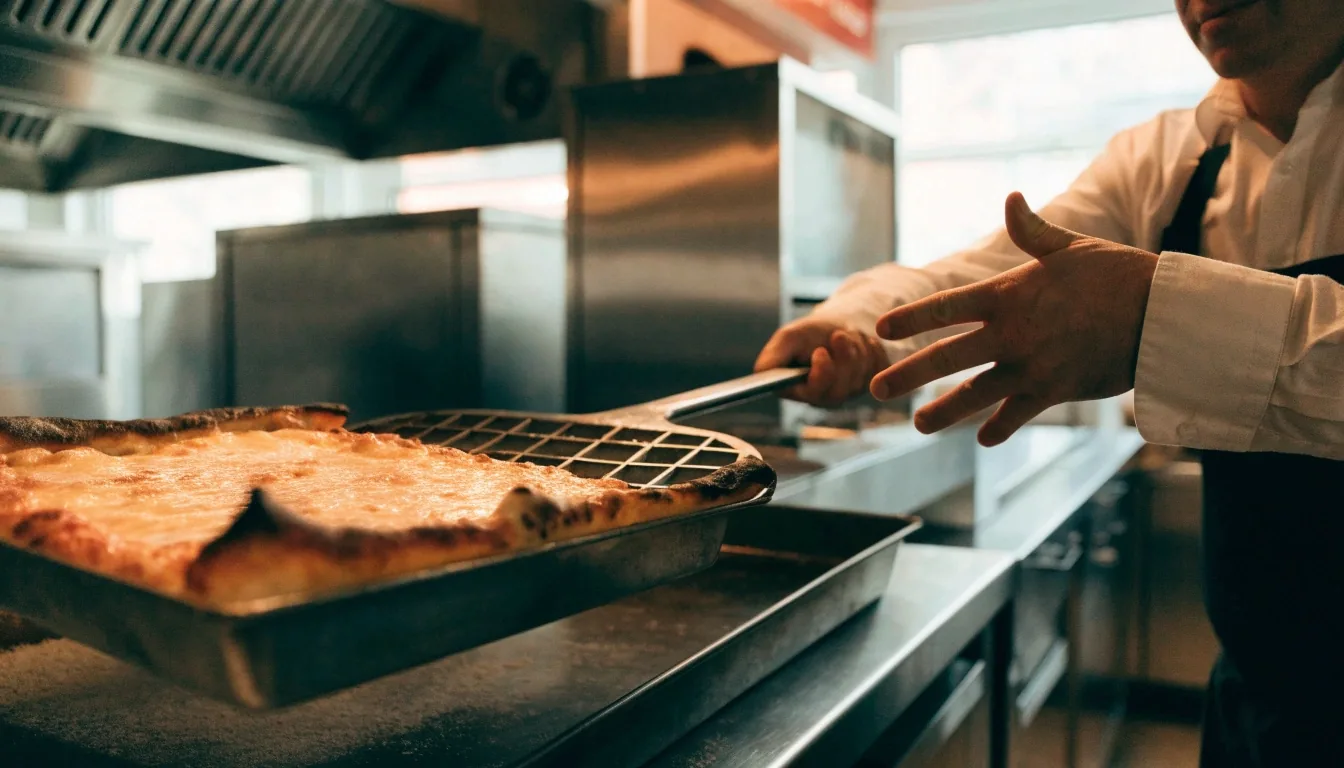
- Detroit-style: rectangular and crispy-edged Steel-pan baked, caramelized cheese edge Thick rectangular cut where cheese fries against the pan. Once regional, now widely copied. Built for people who reach for the crisp corners first.
- Pan-baked
How the styles compare on structure
The four styles differ mostly in crust thickness, pan or peel, and how much topping they can carry. Those structural choices decide how the pizza eats more than the toppings do. Learn the build and you can predict the experience.
Thin crust and New York-style are both thin and hand-tossed, but New York slices run larger and fold. Deep dish and Detroit-style are both thick and pan-baked, but deep dish is round and pie-like while Detroit-style is rectangular with a fried cheese edge.
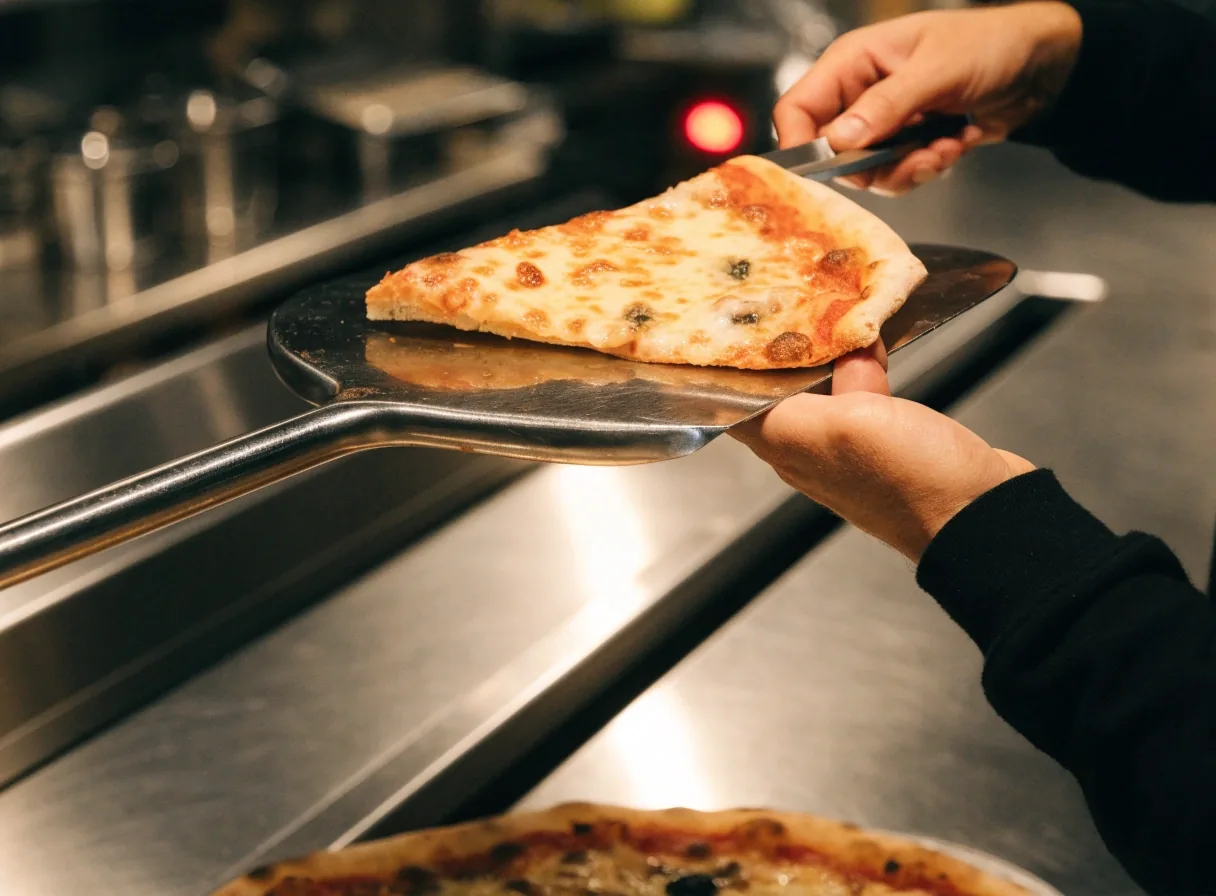
Thin crust at Dewey's
Hand-tossed and deck-baked, never pressed into a pan. Lighter pies and faster bakes that work for dine-in and carry-out.
New York-style slice
Large, thin and chewy at the rim. Fold it so the center holds. The easiest baseline when you compare any other thin pizza.
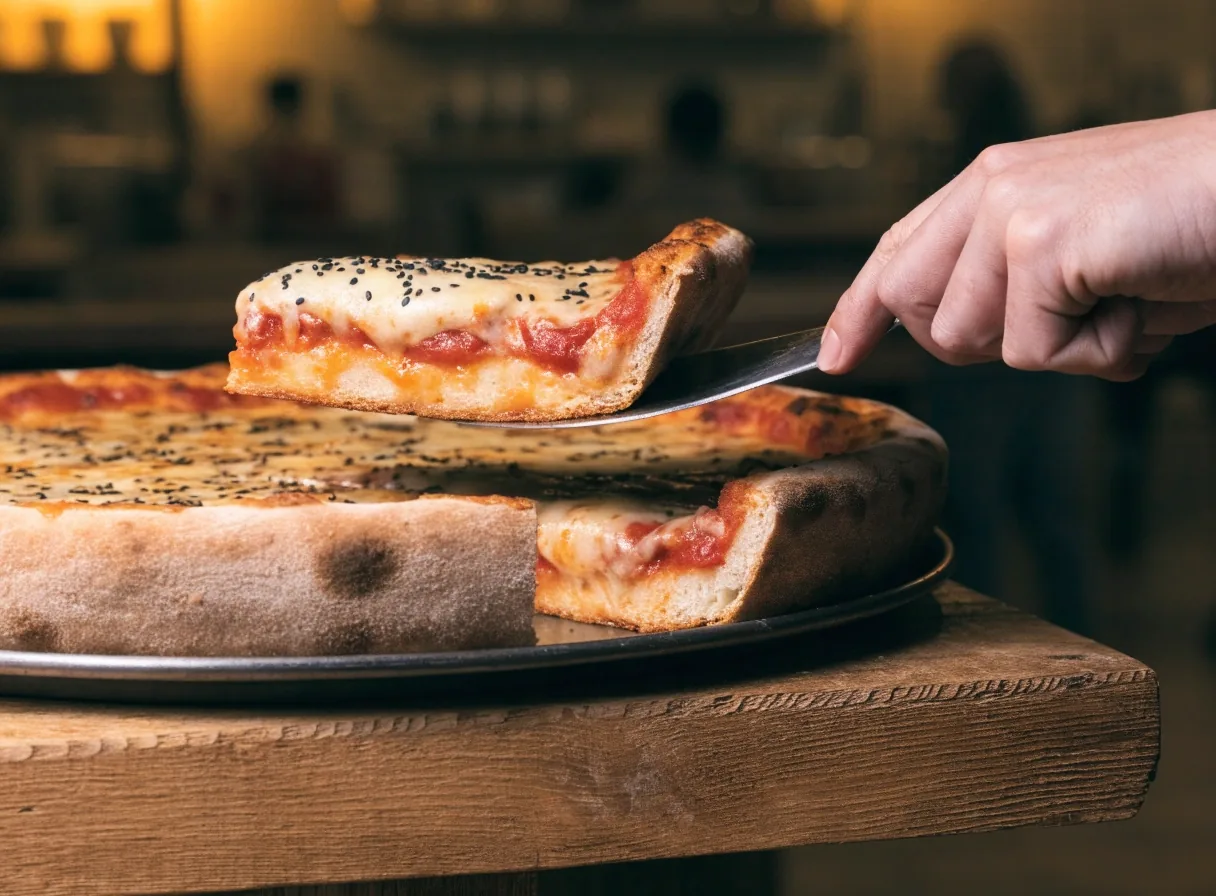
Detroit and deep dish
Both thick and pan-baked. Detroit-style fries its cheese edge in a steel pan; deep dish stays round, tall and rich per slice.
Where regional styles become national
Chicago deep dish and Detroit-style both started as city traditions and became national menu items. A regional specialty gets attention, other restaurants copy it, and within a few years it appears far from its origin. The label tells you the tradition, not the location.
City origin
A style earns its name in one market, tied to local ovens and habits.
Soil before brand
Shared widely
Other pizzerias adopt the build, and guests learn what to expect from the name.
Copied with care
Kept consistent
What a chain can promise is consistency of style, bake after bake.
Same crust, each visit
How to judge a pizzeria by its style
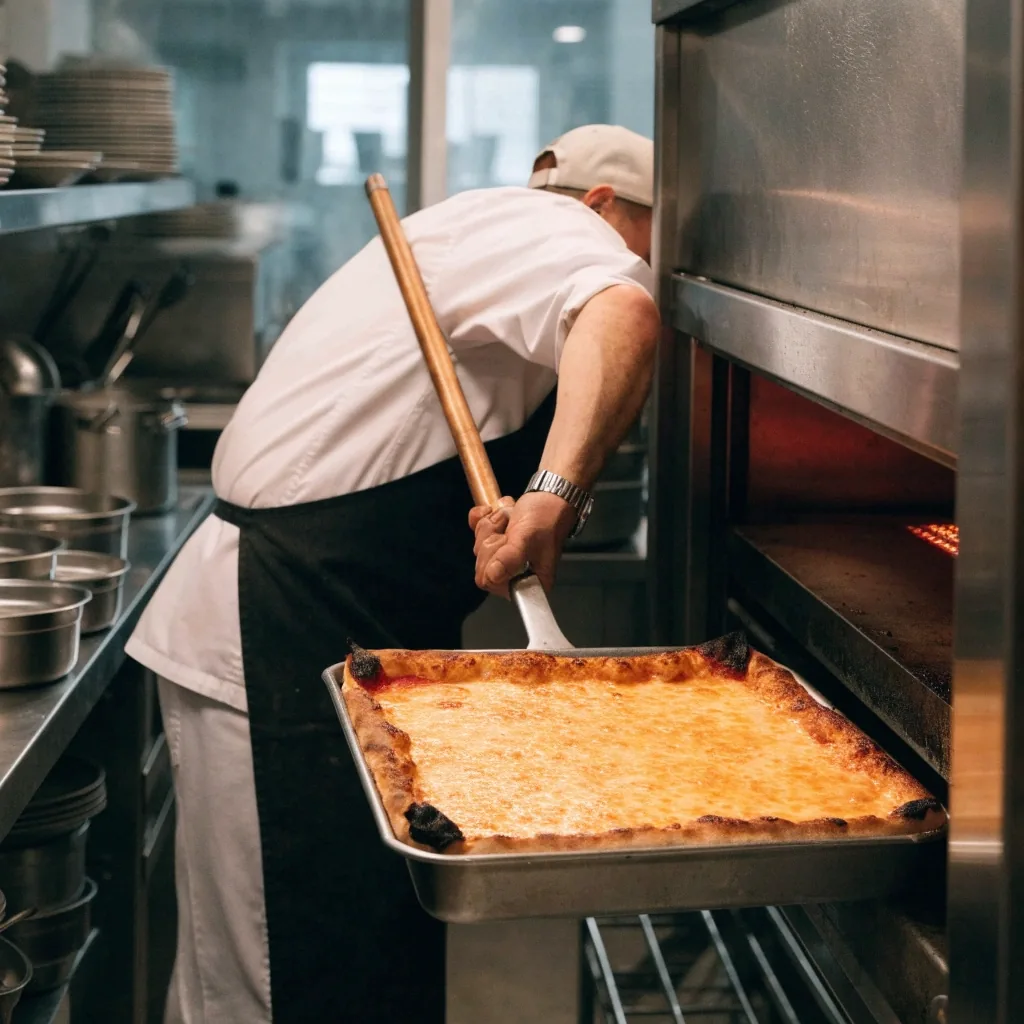
Start with the style it claims and check whether the pizza matches it. A thin crust should be crisp, not floppy. A deep dish should hold its structure. A Detroit-style should show a caramelized edge.
Match the claim. Judge a thin pie as a thin pie, not against a deep dish.
Check the topping load. A heavy build on a thin base tends to fail; the base should carry what sits on it.
Think about the box. Not every style survives carry-out. Thin crust travels best; tall pies need time and care.
How Dewey's fits the map
Dewey's Pizza sits firmly in the thin-crust, handmade tradition rather than the deep-dish or pan-baked lane. That choice shapes the whole menu: lighter pies, faster bakes, and a format that works for carry-out as well as a sit-down dinner.
It is a different bet from a deep-dish specialist, and it is why hand-tossing matters so much in the kitchen. The other styles are worth knowing because they explain what a thin crust is not. Order accordingly and the meal makes sense.
Lighter pies
Thin, crisp rounds that eat as a normal dinner, not a project. Toppings stay balanced so the center stays firm.
Faster bakes
Deck-oven heat and a thin base mean a quicker bake than a tall pan pie, with an open kitchen you can watch.
Carry-out ready
The format holds up in a box for the drive home. Visit at 1324 Vine St or order out during open hours.
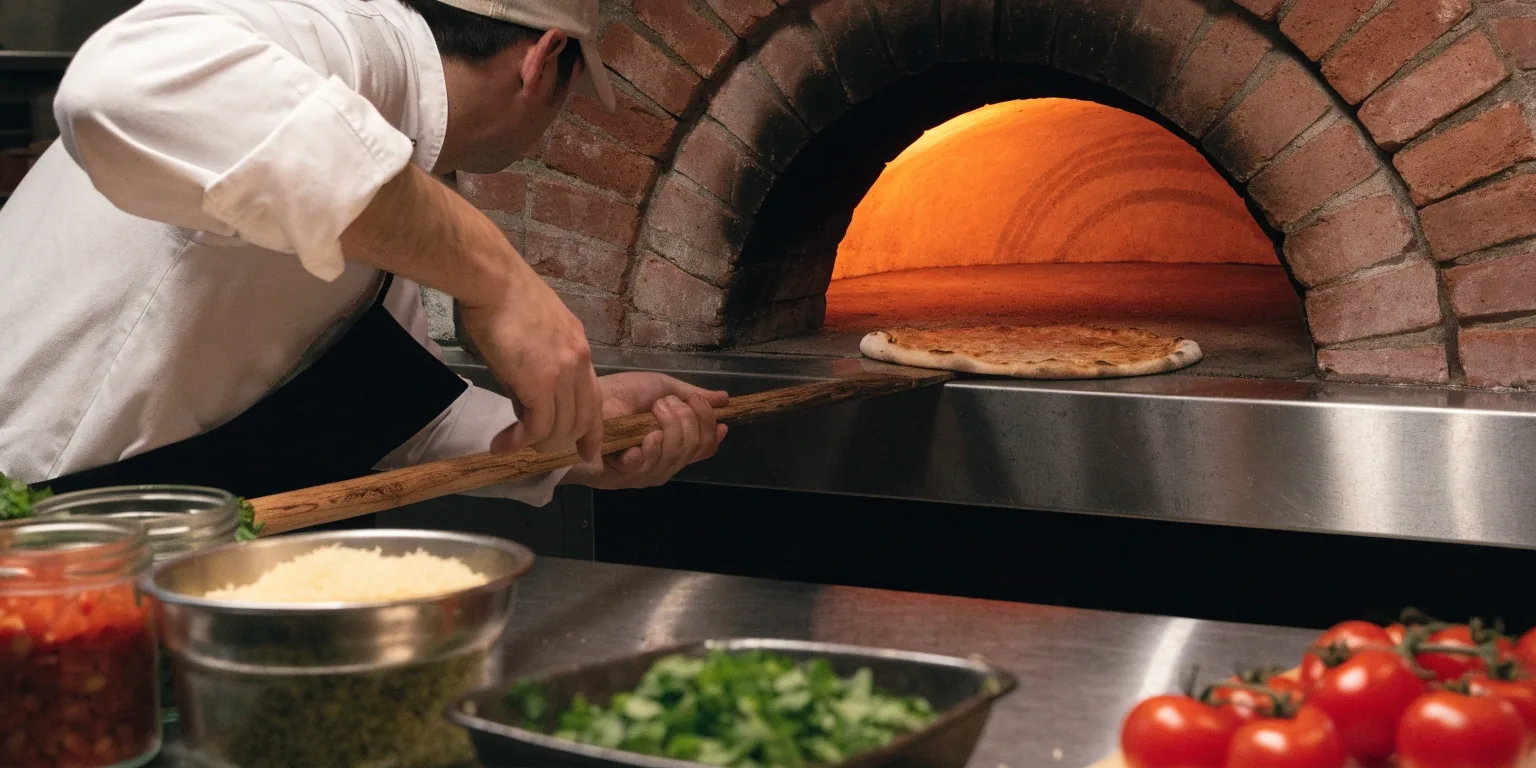
Once you know the structure, you can taste the difference.
Thin or tall, round or rectangular — pick the build that fits the evening, then pair it well.
Style questions, answered
Short answers for the counter, the table, and the drive home. Open hours are Monday to Sunday, 11:00 AM to 10:00 PM.
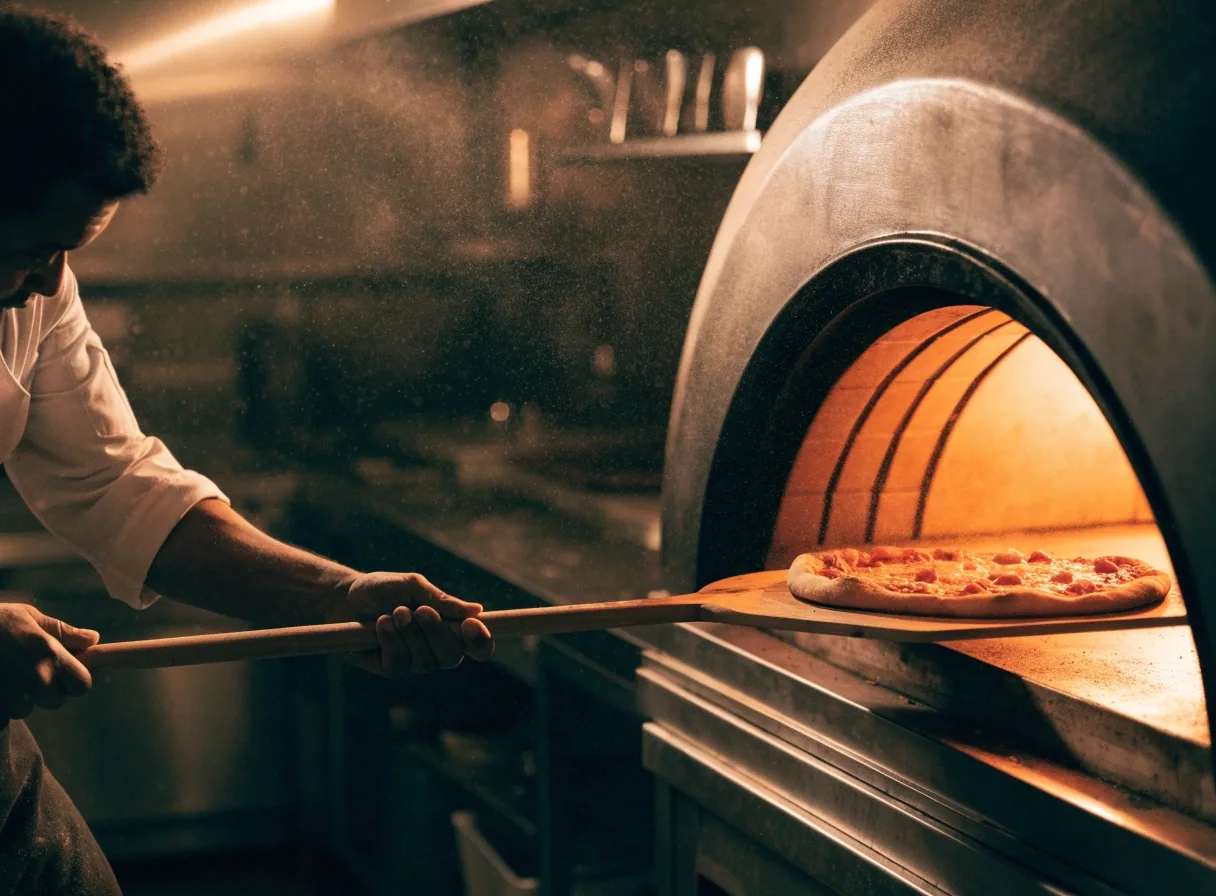
Hand-tossed thin crust, the Dewey's base.
What is the difference between thin crust and New York-style?
Both are thin and hand-tossed. New York-style slices are larger and meant to be folded; thin crust is typically cut into smaller slices and eaten flat.
Is deep dish the same as Detroit-style?
No. Deep dish is round, tall and pie-like, often eaten with a fork. Detroit-style is rectangular, pan-baked and known for a crispy cheese edge.
What style does Dewey's Pizza serve?
Thin crust, handmade and hand-tossed, baked in a deck oven. It is the base for the specialty pies and build-your-own options on the menu.
Why did regional styles spread nationwide?
A regional specialty gets attention, other restaurants adopt it, and it becomes a national menu item. That is how deep dish and Detroit-style traveled far beyond their home cities.
Ready to taste the thin-crust difference?
Visit 1324 Vine St, Cincinnati, or call +1 513-492-5581.